The between-session gap is costing your clients progress.

Neurofit gives you objective performance data, adaptive activities, and claim-ready reports — for every client, every day between sessions. No downloads. No guesswork.

You're working with incomplete data.

A weekly session gives you 60 minutes of insight. Neurofit gives you the other 10,000 minutes — with objective, trackable cognitive performance data.

No visibility between sessions

You see your client for an hour a week. What happens during the other 167 hours is invisible — until Neurofit. Structured between-session practice gives your client daily cognitive challenge AND gives you daily data on what happened.

Documentation bottlenecks

Auto-generated progress reports eliminate the manual documentation burden. Export structured, claim-ready summaries for insurers, families, and funding bodies — in seconds, not hours.

Engagement that drops off

Homework sheets get lost. PDFs don't get opened. Neurofit delivers engaging, adaptive cognitive activities in a desktop browser — at home, in clinic, or during telehealth — and sends data straight back to you.

Everything you need to manage a caseload — in one screen.

1

See your full caseload at a glance

Your dashboard shows every active client, their last session, current performance trajectory, and any flagged regressions — all at once, without clicking through individual charts. See what happened between sessions before your next appointment starts.

2

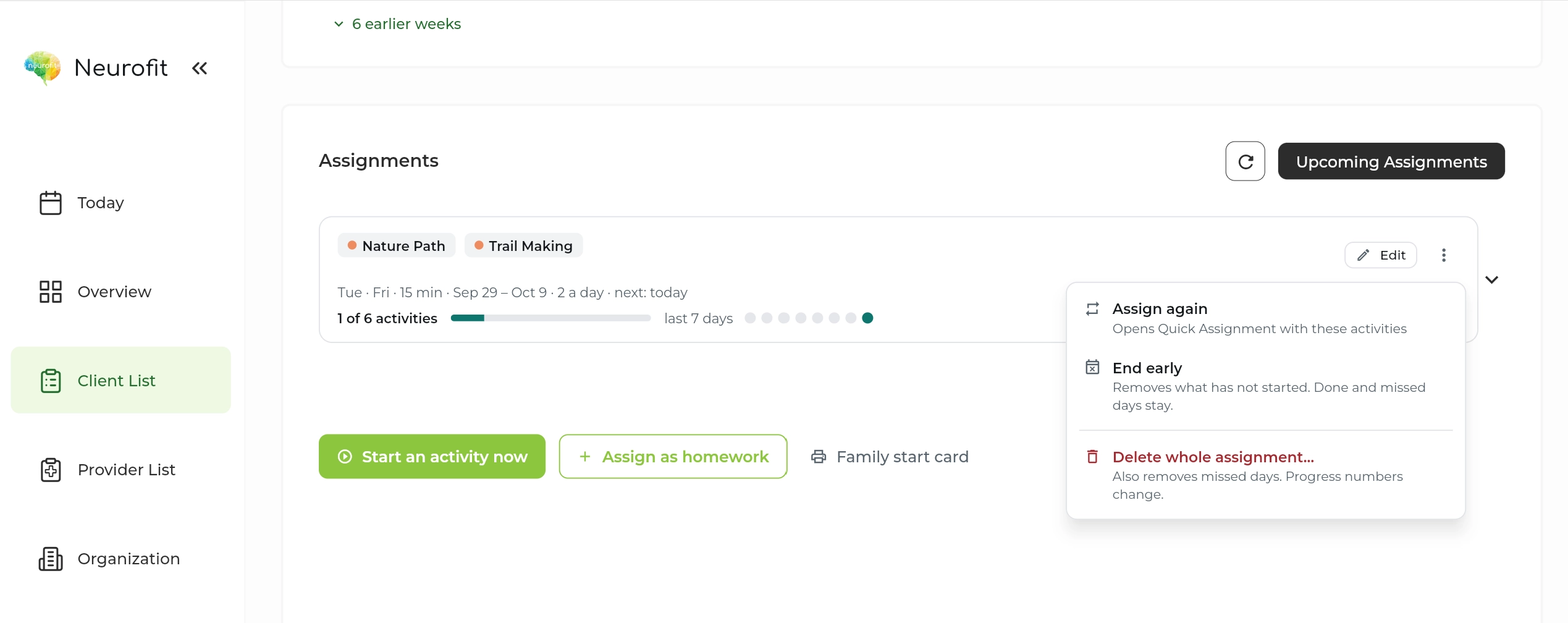
Assign activities in seconds

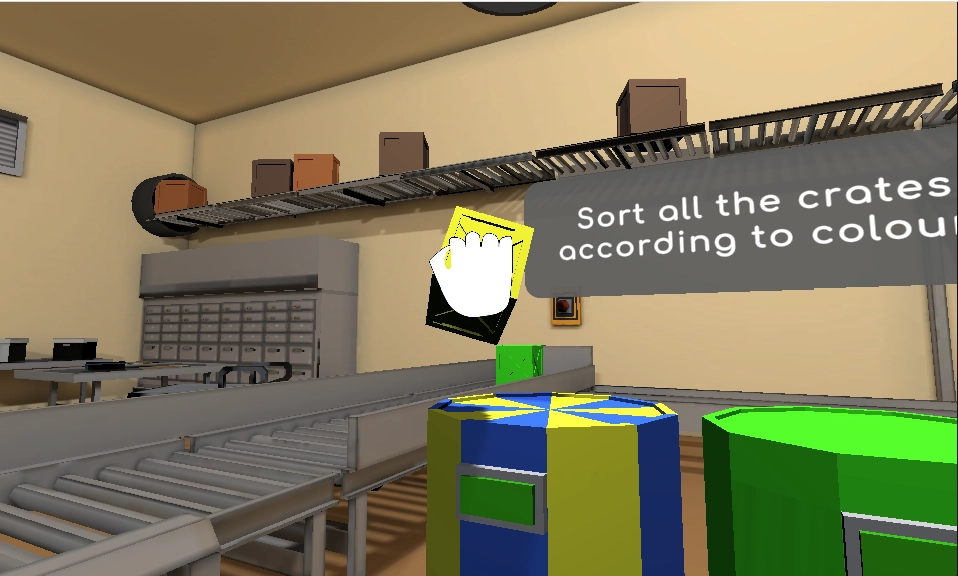
Choose from adaptive cognitive activities built around real-world tasks — meal planning, scheduling, route navigation, and problem-solving. Each targets specific cognitive domains (memory, attention, processing speed, executive function) while practicing the functional skills your clients need for daily life. Set frequency and difficulty — Neurofit auto-adjusts from there.

3

Track objective performance data

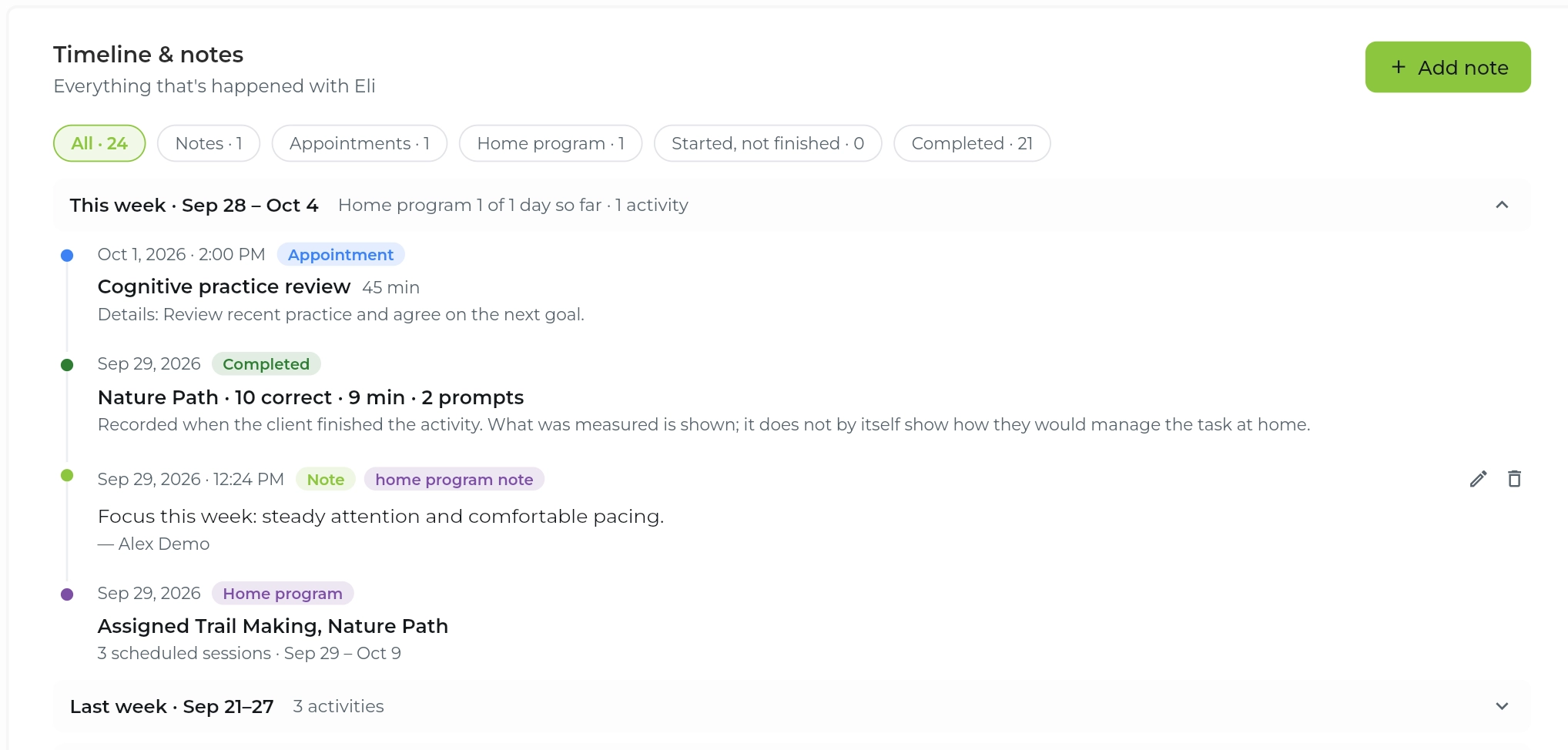
Reaction time, accuracy, engagement, effort, and domain-specific scores flow back automatically after every session. Objective cognitive data and subjective behavioral signals — in one view.

4

Export claim-ready reports

Generate structured progress reports formatted for insurance claims, funder reviews, and family updates. All data, no formatting work — ready in one click.

Neurofit clinician dashboard showing caseload overview and daily activity trends

Objective performance AND subjective experience — in one view.

Most platforms show you cognitive scores or engagement metrics. Neurofit shows both — because treatment decisions require the full picture.

Objective Performance

What their brain is doing.

Reaction Time

Response speed across trials

Accuracy

Correct vs. incorrect responses

Processing Speed

Task completion rate over time

Attention

Sustained focus and consistency

Executive Function

Planning, sequencing, cognitive control

Subjective & Behavioral

How they're experiencing it.

Engagement

How actively the client participates

Effort

Self-reported exertion level

Frustration

Difficulty tolerance and emotional response

Mood

Pre/post session emotional state

When a client's accuracy improves but frustration spikes, the program is too hard. When engagement drops but scores hold steady, they're bored. Both signals matter — and both are in your dashboard.

Built for the complexity of real caseloads.

One platform across the cognitive rehabilitation spectrum — used with clients aged 6 to 100.

From pediatric brain injury to adult stroke recovery, MVA rehabilitation to long-term care — one platform spans the full spectrum. The infrastructure is population-agnostic. What changes is how you apply it clinically.

Acquired Brain Injury

Cognitive recovery and return-to-function tracking

Stroke

Memory, attention, and processing speed rehabilitation

Concussion / mTBI

Return-to-school and return-to-work readiness tracking

ASD

Engagement, motivation, and executive function support

ADHD

Attention and impulse control activities

Dementia / MCI

Cognitive maintenance and longitudinal decline tracking

Burnout & Mental Fatigue

Cognitive recovery and return-to-work readiness

Chronic Pain

Cognitive load and attention capacity tracking

Healthy Aging

Proactive cognitive fitness for older adults

Post-COVID

Cognitive fog and memory recovery

Paediatric Rehab

Engaging activities calibrated for children ages 6+

Oncology

Chemotherapy-related cognitive effects ("chemo brain")

What 50,000+ sessions tell us.

With as little as 5 minutes of daily use, Neurofit users across clinical populations show statistically significant improvements in the first 4 weeks.

Adults · Ages 18–64 · 3,000+ sessions

81%
Improvement in Processing Speed
4 weeks
61%
Improvement in Memory
4 weeks
28%
Improvement in Attention
4 weeks

Pediatrics · ASD · Ages 6+

147%
Improvement in Motivation
4 weeks · self-reported · single-case study

Older Adults · Ages 57–84

12%
Improvement in Mood
5 weeks · 20-participant cohort · 30 min/day

Improvements are statistically significant (p ≤ 0.05). Based on 3,000+ clinical sessions. Pediatric motivation data from a single-case study (ASD, pre-teen). Older adult mood data from a 20-participant cohort.

Real clinicians. Real outcomes.

Stroke Recovery · Clinician Case Study

Maysyn's Story

After two strokes, Maysyn's cognitive recovery was progressing — but her OT had only 60 minutes a week to work with. The gaps between sessions were where progress stalled.

Her therapist assigned 10–15 minutes of Neurofit daily, targeting memory and processing speed. Within 6 weeks, session notes reflected what the data confirmed: measurable gains in reaction time and sustained attention.

The therapist also exported Neurofit's progress summary to support Maysyn's insurance file — cutting documentation time from 45 minutes to under 5.

"I could finally see what was happening between our sessions. The data helped me adjust Maysyn's program in real time instead of waiting to notice a change in the clinic."

— Maysyn's Occupational Therapist

6 wks
To measurable cognitive improvement
with 10–15 min daily Neurofit sessions
↓45m
Saved per report
100%
Insurance accepted

Documentation Partner

We don't partner with just anyone. We went back and forth with Alex a lot — and we love Neurofit. The activities translate into real-world function, and it collects measurable progress as your client works, so you're not just guessing.
Nicole Poppert, MS, OTR/L & Stephanie Mayer, PT, DPT · The Note Ninjas

Common questions from clinicians.

Neurofit is used by occupational therapists, physiotherapists, neuropsychologists, speech-language pathologists, and rehabilitation specialists. It's designed to complement any discipline that works with cognitive function across any population.

No. Neurofit runs in any modern desktop browser. Clients receive a link, click it, and start — no app store, no installation, no account setup required on their end.

Neurofit uses an adaptive algorithm that adjusts activity difficulty in real time based on each client's performance. If a client is consistently accurate, difficulty increases. If they're struggling, it steps back — keeping every session in the optimal challenge zone.

Yes. Because Neurofit runs entirely in the browser, clients can complete activities during telehealth sessions or independently at home. Performance data syncs automatically to your dashboard regardless of where the session takes place.

Yes. Neurofit is HIPAA-aligned and PIPEDA/PHIPA compliant. Data is stored in Canada and the United States. BAAs are available for enterprise accounts. We take data privacy seriously — your clients' information is never sold or shared with third parties.

The Starter plan is free for up to 5 active clients per month — no trial, no expiration. Pro is $35 CAD per active client per month, with all active clients billed from client 1. An "active client" is one who logs in at least once during a billing period. Inactive clients are never charged. See pricing for details.

Start free — up to 5 active clients.

Sign up in minutes. Invite your first client. Get data you've never had before.